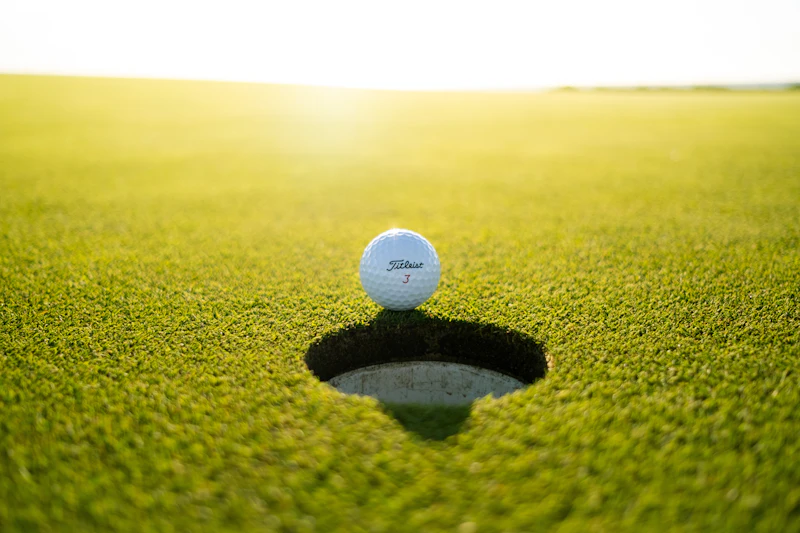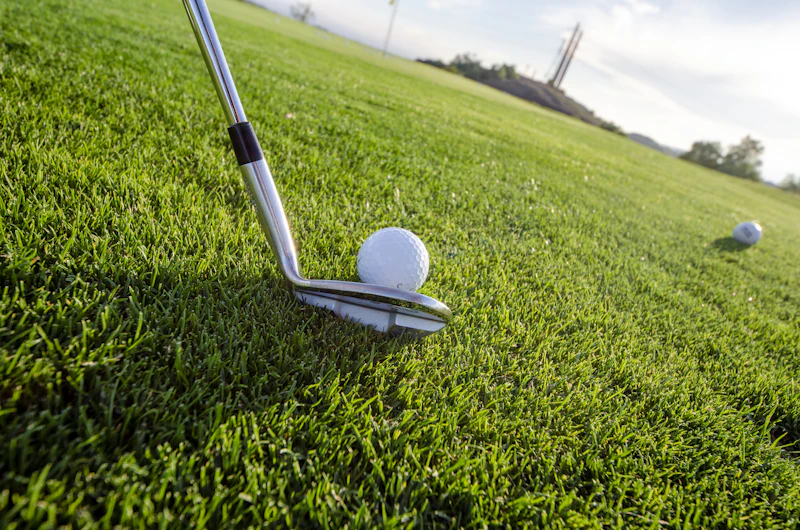

Golf is a game where you hit a small ball into a hole using different clubs, in as few strokes as possible. A round is 18 holes. Par for the round is usually 72. If you shoot 100 on your first time out, you're doing fine.
What you need to start
Clubs
You don't need 14 clubs (the maximum allowed). Start with 7-8: driver, 5-wood or hybrid, 6-iron, 8-iron, pitching wedge, sand wedge, and putter. A used starter set costs $150-300. New sets run $300-600.
Don't buy expensive clubs yet. Your swing will change a lot in your first year, and the clubs you'd be fitted for now won't match your swing 6 months from now.
Balls
Use cheap balls ($15-20 per dozen). You'll lose a lot of them. Titleist Pro V1s ($50/dozen) won't help a beginner. Buy Kirkland, Noodle, or Top Flite balls until you can keep most of them on the course. See our golf ball guide for details.
Other gear
- Golf glove: $10-25. Wear it on your lead hand (left hand for right-handed players).
- Tees: wooden tees, $3-5 for 100.
- Golf shoes: any athletic shoe with soft spikes or flat soles works. Specialized golf shoes ($60-150) help on wet grass.
The basics of playing
How a hole works
Each hole has a tee box (where you start), a fairway (the short-cut grass leading to the green), and a green (where the hole is). Your goal: get the ball from the tee into the hole in as few shots as possible.
 Image credit: Unsplash
Holes are rated par-3, par-4, or par-5 based on length. Par is the expected score for a skilled golfer. See golf scoring terms for the full breakdown.
Scoring
Count every stroke, including penalty strokes. Lower is better. A birdie (-1) is great. Bogey (+1) is normal for most amateurs. Double bogey (+2) happens. Anything worse, write it down and move on.
Etiquette
- Don't talk or move when someone is hitting.
- Fix your divots (replace the chunk of grass) and ball marks on the green (use a repair tool).
- Keep pace with the group ahead. If you fall behind, speed up or let faster groups play through.
- Rake bunkers after you hit from them.
Your first 5 skills to learn
1. Grip
The grip controls the clubface. Learn the overlapping or interlocking grip. Hold the club in your fingers, not your palm. Light pressure, about 4/10.
2. Setup and posture
Feet shoulder-width. Bend from the hips. Arms hang naturally. Weight balanced. Ball position varies by club (driver forward, wedges center). Details in our swing guide.
3. Putting
Putting accounts for about 40% of all strokes. Practice 3-foot putts until you make 8 out of 10. Then practice lag putting from 20-30 feet to get the speed right.
4. Chipping
Chips are short shots around the green. Use a pitching wedge or 9-iron. Ball back in stance, hands forward, weight on front foot. Small backswing. Let the loft do the work.
5. Full swing
Start with a 7-iron. Focus on making contact with the ball before the ground. Don't try to hit it hard. Smooth tempo beats raw power for beginners. See how to hit a golf ball.
Where to play
Start at a driving range ($8-15 for a bucket of balls). Once you can get the ball airborne consistently, try a par-3 course ($15-25 for 9 holes). Par-3 courses are shorter, faster, and less intimidating than a full course.
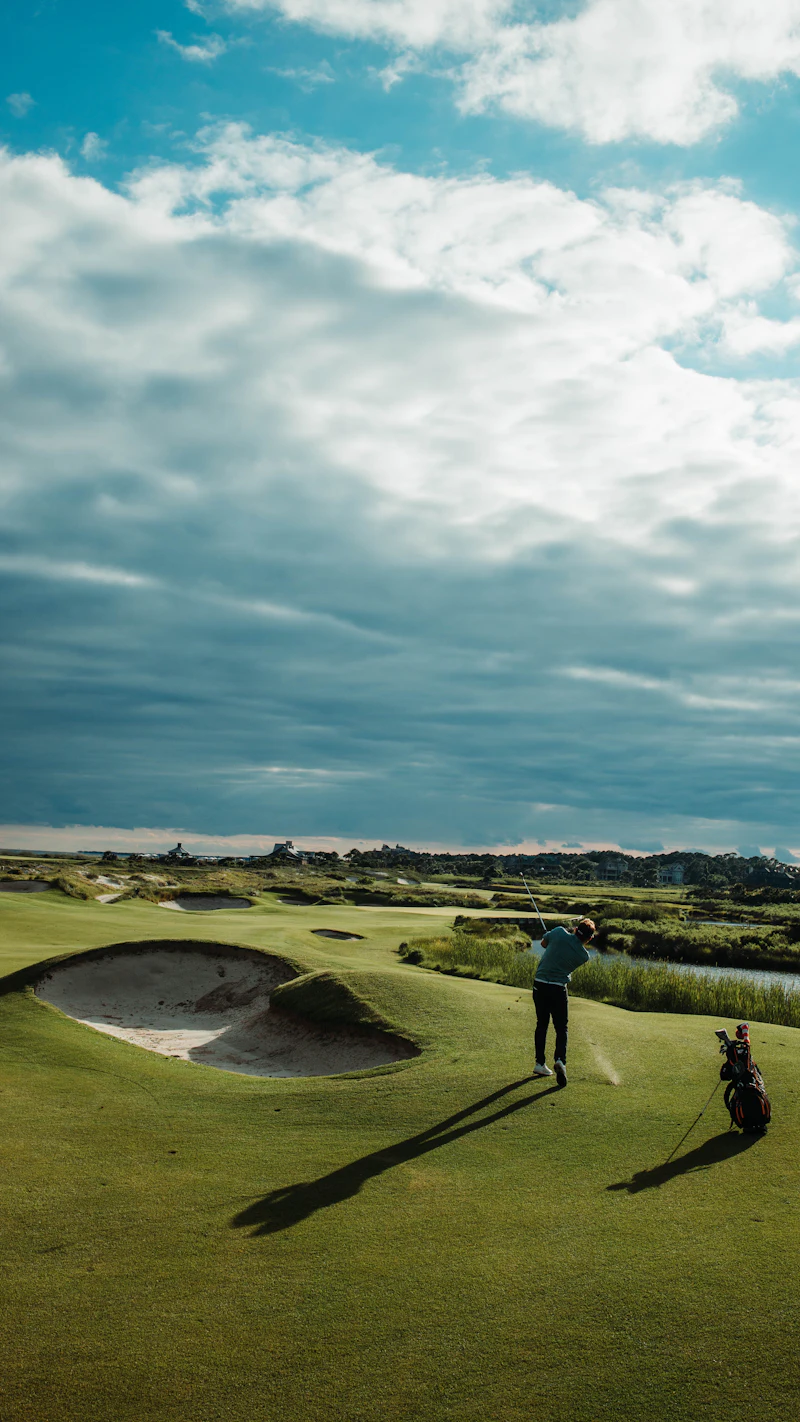 Image credit: Unsplash
When you're ready for a full course, play at off-peak times (weekday afternoons) when the course is less busy and there's less pressure to play fast. Check how long a round takes.
How to improve faster
- Take 3-5 lessons from a PGA teaching pro ($50-150/hour). One lesson is worth 10 range sessions of self-practice.
- Practice putting for 50% of your practice time. It's the fastest way to lower your score.
- Play the forward tees until you break 100. It's more fun and faster.
- Track your stats: fairways hit, greens in regulation, putts per round. You'll see where your strokes are actually being lost.
Related guides: handicap system explained, club fitting basics, how to clean your clubs.